Oatmeal Jam Bars
April 22, 2011
 With Easter around the corner, the house is a buzz with preparations for the Easter bunny. The chickens are busy laying eggs, the kids are dying them and collecting greens from the garden to leave for a bunny snack. As the Easter bunny’s executive assistant, I have collected some items for the bunny to present the children. We (the grown-ups at least) are not big on candy in our house (especially when the kids would presumably start eating it upon rising and discovering their baskets.)
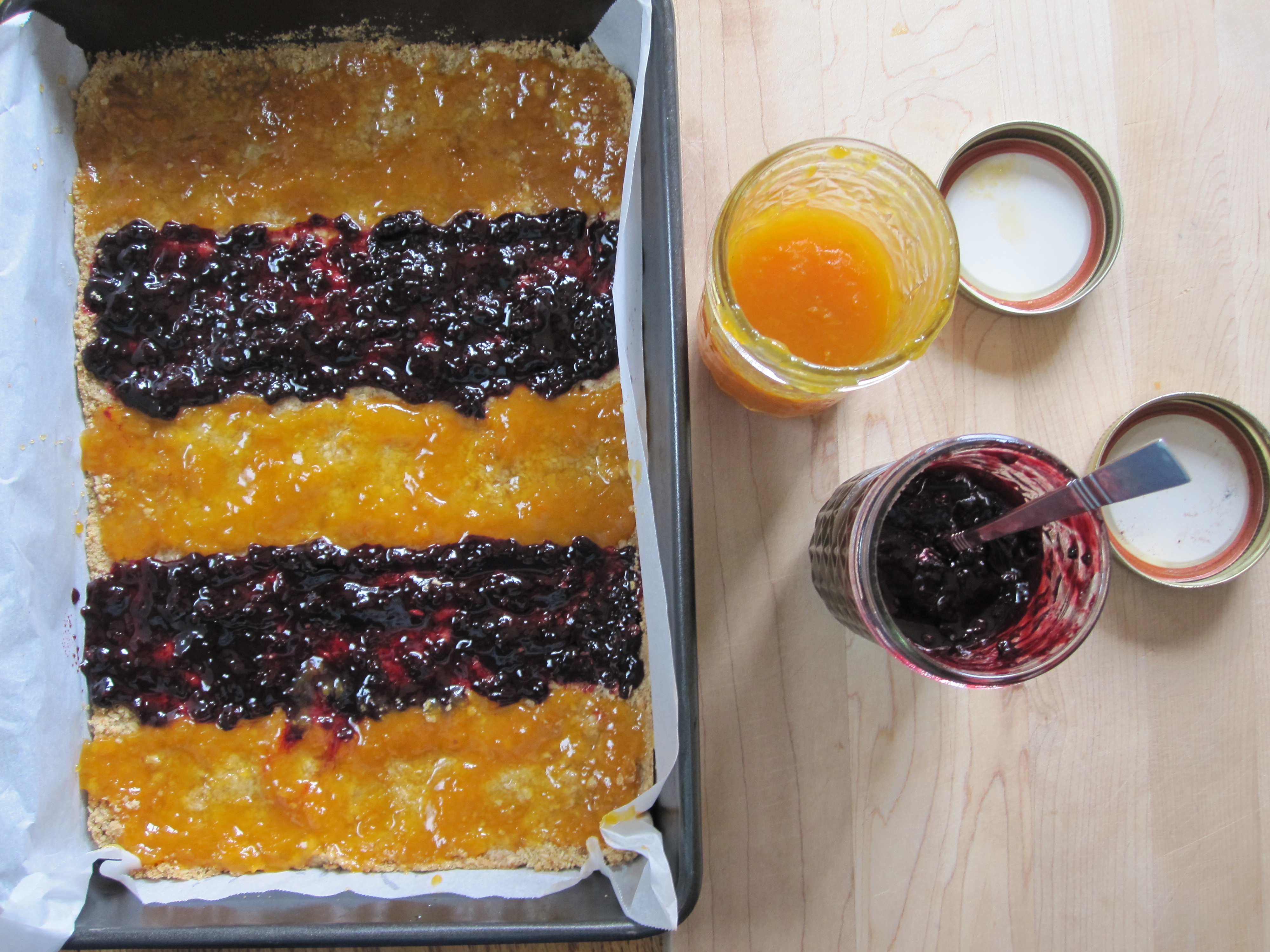 So this year, there are books, stickers, and as a compromise, a small cache of jelly beans. I wanted there to be something special as well, something beautiful, exciting, sweet, but not so over the top that I would cringe as my kids ripped into them at 7 am. Ah ha! This year the Easter Bunny takes up baking!
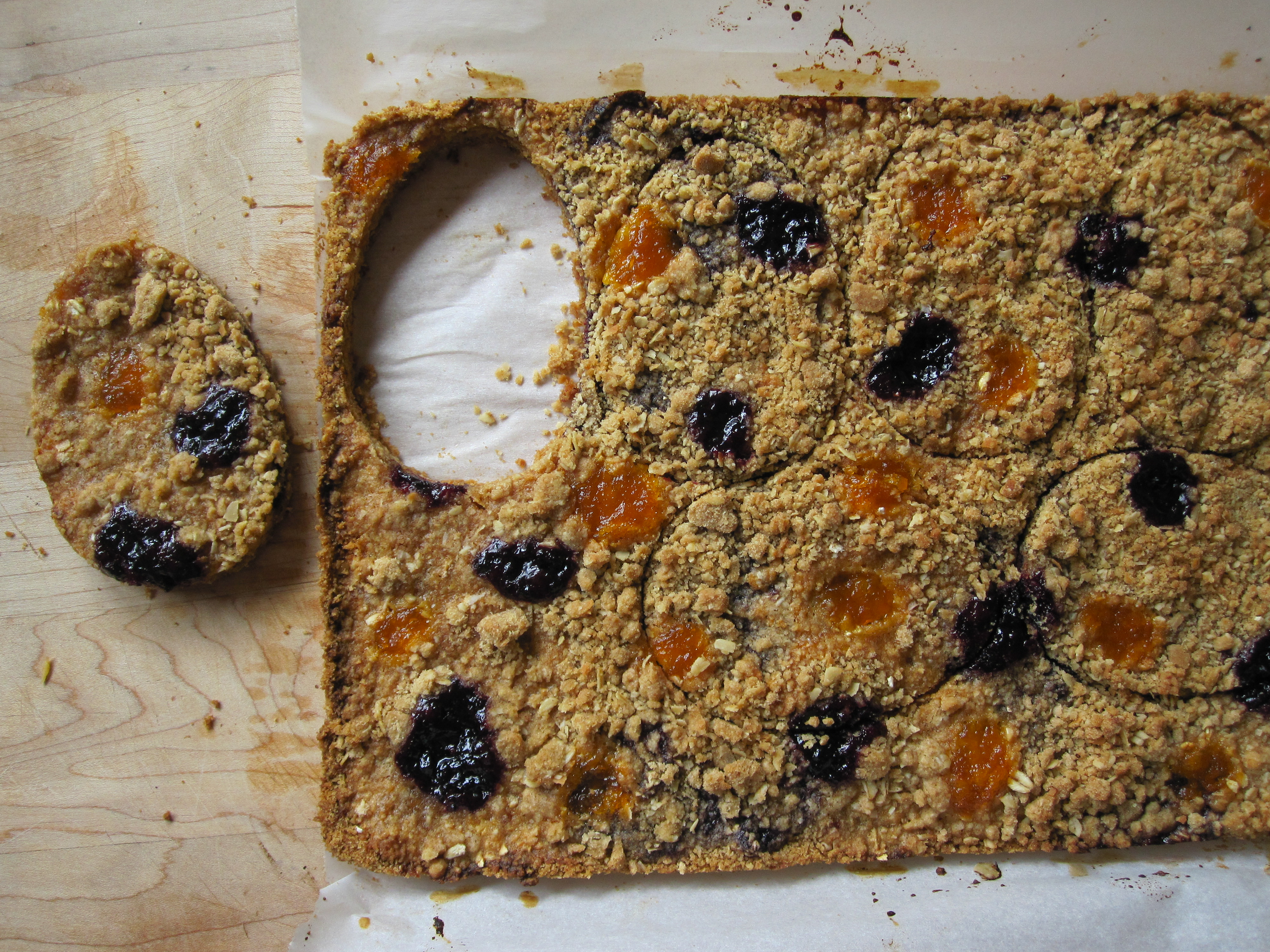
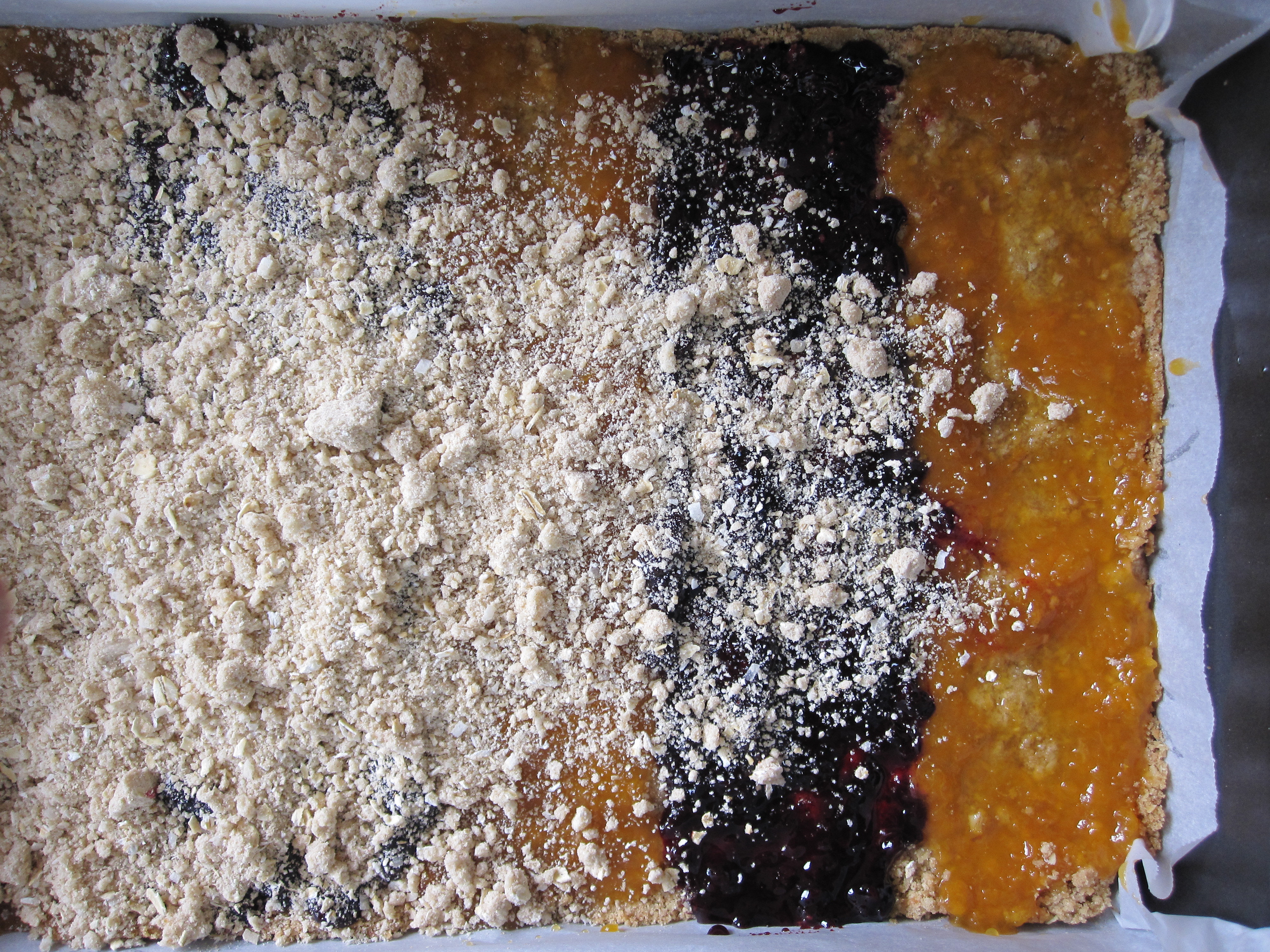 Strolling through the supermarket aisles, I found a large cookie cutter in the shape of an egg. Inspired, I sought out a recipe for an oat bar which I would top with jam to create a colorful egg-shaped cookie bar. After an extensive search, I settled on a recipe for Raspberry Breakfast Bars from Deb at Smitten Kitchen. Since my pantry is still full of jam, I adapted the recipe to skip the raspberry filling (though it looks quite good and I may revisit it in raspberry season) and use my homemade jam instead. I also added coconut flakes to the crust, just because I am on a coconut kick right now.
 The real trick here was to figure out a way to make sure the jam would show through. The original recipe calls for the crumb topping to cover the entire bar, but I wanted colorful polka dots of jam. To accomplish this, I tried multiple methods and settled on dotting the top of the crust with jam. Once cool, I cut them into egg shapes and bagged them individually for the Easter bunny to present. Mmmm, the smell of these bars is out of control.
Read the rest of this entry »
Sesame Ginger Meatballs
April 16, 2011
 The best weeknight meals are those that are simple to prepare, nutritious, and are greeted with delight by the hungry munchkins at the table. By the time the kids and I get home, everyone is tired and hungry. When I am really tight on time, I start the rice cooker in the morning before I go to work. When I return home the rice is ready and all I have to do is whip up something to serve on top. These Asian-inspired meatballs are a great alternative to our regular stir fries. A bonus, my kids love meatballs and broccoli! They squealed with delight the last time I served this :)
Ginger Sesame Meatballs are very easy to make and super tasty! Mix up the pork with garlic, ginger, soy and other flavors, form the meatballs and cook. I serve them with brown rice and broccoli or another seasonal vegetable. A little terriyaki sauce on top and some sambal oeleck on the side adds another dimension of flavor and color.
These meatballs are really good! Don’t let the photo fool you. The truth is, it is very difficult to take a good picture of a meatball!
Ginger Sesame Meatballs
adapted from Cooking Light
serves 4
1 pound ground pork
1/2 cup panko
1 egg
1 tablespoon ginger, grated
1/4 cup green onion, minced
6 cloves garlic, minced
1 Tablespoon chile paste (sambal oeleck)
1/4 teaspoon salt
2tablespoons brown sugar
3 tablespoons soy sauce
2tablespoons sesame oil
1 tablespoon vegetable oil (for frying)
sesame seeds for garnish
Terriyaki Sauce (optional)
Mix all ingredients except for vegetable oil and terriyaki sauce in a bowl. Form meat into balls. I like to make large meatballs for this dinner. You could easily make smaller ones if you prefer or if you are making these for an appetizer.
Preheat oven 400 degrees.
Heat cast iron skillet over medium heat. Coat pan with vegetable oil. Fry meatballs in pan, turning so that each side is evenly brown, but meat is not cooked through. Transfer the pan to the oven (or put meatballs on a baking tray if your pan is not big enough). Bake for 10 minutes or until the center of the meatball reaches 160 degrees. Serve hot with rice and veggies.
Here is a printer-friendly version of the recipe: Ginger Sesame Meatballs
You may also like:

Kottbullar (Swedish Meatballs)


Lentil Bulgur Salad with Feta and Mint
April 13, 2011
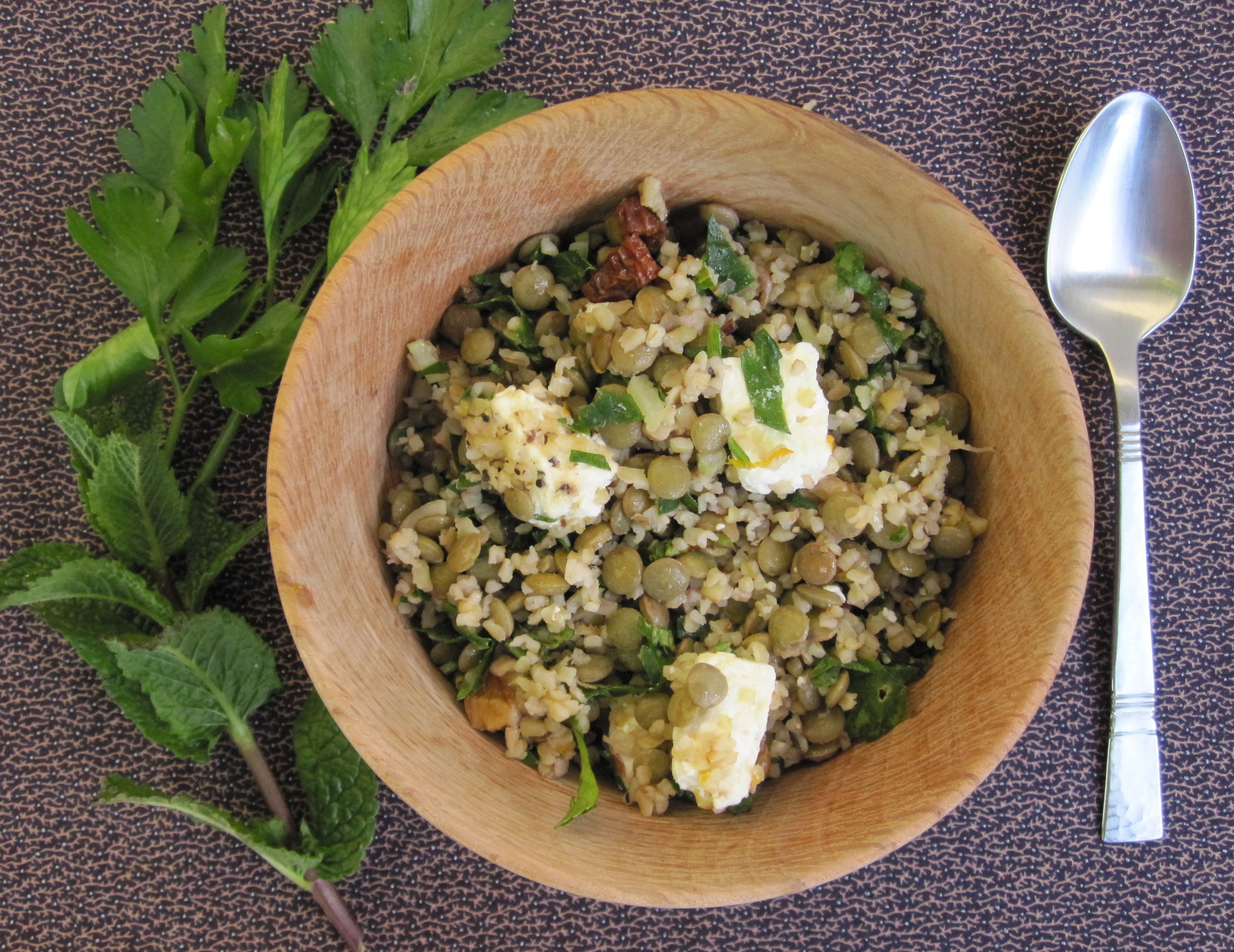 Our garden harvest is in a bit of a lull these days. The profusion of kale and broccoli that feed us through the winter is done. While artichokes are beginning to grace our table, the peas and fresh greens of spring have not quite matured. The herbs however, jubilant in the rain-chasing sun, are thriving! We have piles of oregano, mint, parsley, and chives. I love adding combinations of them to just about any dish.
 Lentil Bulgur Salad with Feta and Mint is similar to a tabouli, though heartier. The lentils and bulgur combine to form a complete protein. It is incredibly nourishing and satisfying. The mint, parsley, and lemon add bright flavors and beautiful color. The feta contributes a creamy, tangy element. In summertime, I would make this dish with fresh tomatoes. In springtime, why ruin a perfectly seasonal salad with mediocre tomatoes? I used up some dried tomatoes from last summer, but you could easily skip them altogether as well. Make this dish ahead for a nice light dinner or bring it along to a picnic or potluck. It travels well.
Crepes with Warm Berry Sauce and Lemon Curd
April 10, 2011
 The countdown to summer has officially begun. Summertime is that special time of year when I hang my teaching hat and spend my days tickling my children, swimming, running through the hills, and of course canning the bounty of the season. So in these final weeks before summer is here, now is the time to clear out the pantry and make room for another season of dutiful and celebratory filling of jars. While some canned goods, such as jam, may be stored for longer, I always aim to eat my preserved foods within one year. Lemon curd is best eaten within 3 to 4 months, after which time the curd may darken, but still be safe to eat for one year.

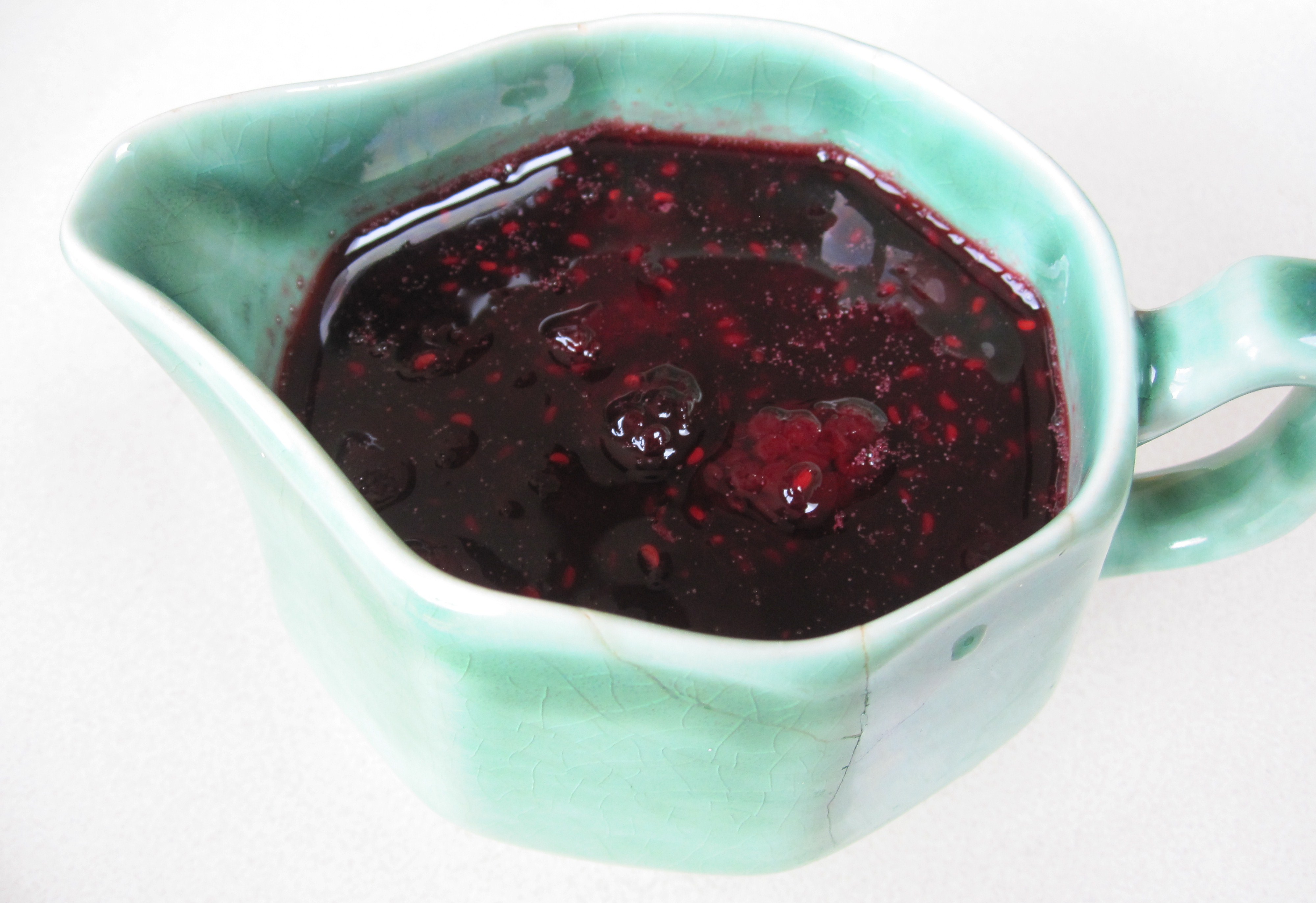
There are many lovely ways to enjoy lemon curd, but not many that I feel justify me to eat it for breakfast. Thanks to the ever versatile crepe, I now feel free to indulge myself! This crepe recipe is directly from Julia Child’s The Way to Cook. They are incredibly easy to make and so good. For this special breakfast, I filled the crepes with lemon curd and topped them with a warm berry sauce made from frozen berries. The tangy lemon, sweet berry, and buttery crepe make for a beautiful and tasty treat. It is just the thing for a special weekend breakfast or brunch.
 Read the rest of this entry »
Dandelion Vinegar
April 8, 2011
 It is time to tap into the gatherer within! While there is a significant movement pushing people to develop their own victory gardens and support local growers, we still tend to ignore the wild plants volunteering all around us. Dandelion, Taraxacum officional, grows wild across much of the United States and so is accessible to just about anyone. Though you probably think more of Round-up than of salad when you see a dandelion, I am here to change that perception. Dandelions are delicious! Dandelion is often wrongly perceived as a foe to the garden and rarely considered an edible treat. Dandelion is both beneficial to the garden, highly nutritious, and tasty.

Dandelions help the garden in multiple ways. Dandelions send down a tap-root that breaks up heavy soil. The root also helps draw nutrients from down deep and then deposit them on surface as the leaves decay. They are also beautiful. It would be hard to find a child that is not in awe of the snowy globes of dandelion seed.
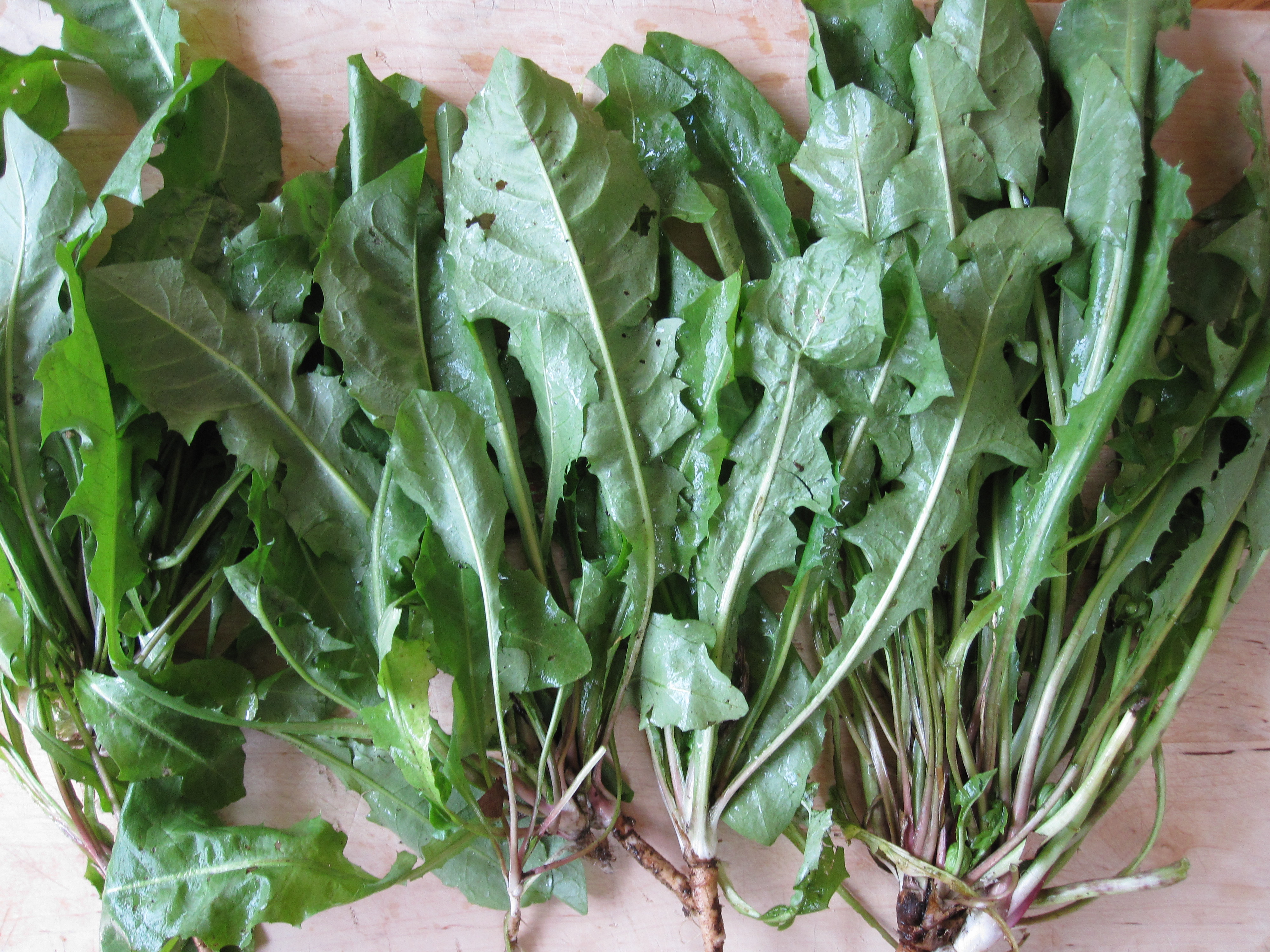 The name, Dandelion, comes from the French, dent de lion, or tooth of the lion. This is a nod at the serrated leaves of the plant. Identify dandelion by its serrated, hairless leaves, its non-branched flower stem, and its milky sap. Dandelion is highly nutritious. It boasts vitamin A, vitamin C, potassium, calcium, iron, and more. Well stocked produce markets offer dandelion greens, but those are a cultivated variety. Most people do not realize that the garden weed is edible. The heavy rains of winter mean a beautiful crop of dandelion growing, with any luck, right outside your door! Harvest dandelion in the spring when the leaves are long, bright green, and fleshy. Since dandelion is often the target of toxic sprays, make absolutely certain that the dandelion you pick is from an area that is free from harmful chemicals.
 The dandelion root and leaves produce a wonderful herbal vinegar. To make dandelion vinegar, harvest the root and leaves from a dandelion plant or many (you will be “weeding” at the same time!). Wash the dandelion carefully, remove any flowers or flower stems. Mince the plant and cover in balsamic vinegar. The dandelion infuses the vinegar with deep, earthy flavors and nutrients. Strain the vinegar and serve in salad dressings, add to a soup for a delightful acidic burst, or use anytime you would use plain balsamic vinegar. The flowers are beautiful added to salads.
Dandelion Vinegar
dandelion leaves and roots
balsamic vinegar
Wash leaves and roots. Remove any flowers, flower stems, or dried leaves. Mince. Place in a sterilized jar and pour balsamic vinegar over the top so that the herb is submerged by 1 inch. Cover and let sit for 3 weeks. Strain the vinegar and use as you wish.
Here is a printer-friendly version of the recipe: Dandelion Vinegar


 My Pantry Shelf
