Vietnamese Hue Noodle Soup
February 27, 2011
 Somewhat recently, I discovered Vietnamese Pho and its cousin Hue. There are a number of restaurants in town that dedicate almost their entire menu to these hot and spicy soups. At first, they seemed so exotic and indulgent with the fresh bean sprouts and peppers topping the hot rich broth perfumed with fresh basil or cilantro. When I first made the soup myself though, I realized how incredibly simple and healthy they are. A few simple fresh ingredients come together with some basic Asian cooking staples: rice noodles, fish sauce, and sambal oeleck. The result is a hot and spicy nourishing soup.
 To speed up cooking time, consider cooking the broth and meat in a pressure cooker. In just ten minutes, the meat is cooked to an almost divine tenderness. You save time and energy, and the dish is possibly more delicious than the traditional method of slow simmering.
 This recipe for Vietnamese Hue Noodle Soup is incredibly versatile. Feel free to substitute chicken or even tofu for the beef (and decrease the cooking time). The garnish is also very adaptable. We have an uncommon fondness for cabbage, so that is our go-to condiment, but that can be replaced with bean sprouts as well. Trade the fresh hot peppers for dried chilies if you prefer. If you do not have lime on hand, give the soup a splash of rice vinegar at the end to add the bright acidic finish. This soup is very good, one of our favorites. Try it and let me know what you think!
Read the rest of this entry »
Salt Preserved Lemons
February 23, 2011
 Yes, it is true, I’m on a serious citrus kick. Why not? What better to brighten the palette on a dark and dreary winter day, than the vibrant colors and tart flavors of lemons, oranges, grapefruit, and lime? Lemons are my current favorite. Last summer, in an act of manifest destiny, we cut down our lemon tree to make way for a larger outdoor dining area. Luckily our neighbors have supplied us with a steady stream of Meyer lemons to fuel each of my citric indulgences. The latest… Salt Preserved Lemons.
 This recipe comes from my grandmother’s recipe file. She, like me, sought out ways to celebrate each harvest and make it last. The first time I made these, I had no idea what to do with them. Luckily, they last a ridiculously long time in the refrigerator, so I had plenty of time to accumulate recipes. (After a year in the fridge, they still tasted fine, but I tossed them because it just seemed wrong to be eating something so old.) They are used often in North African and Middle Eastern foods. They can be added to dishes whole or you can remove the pulp and pith and add the preserved zest.
Fresh Herb Chevre
February 15, 2011
 Last weekend, I took my first cooking class! It was a soft cheese making class taught by Mary Karlin, an expert in artisan cheese. It was such fun to spend a day with other hungry folks trying to expand our culinary repertoire. One of the cheeses we made was chevre. It is incredibly easy to make by simply adding culture to warm goat’s milk and allowing the mixture to sit overnight so the curd can form. I’ll admit my product wasn’t exactly as I dreamed, it was a bit too dry and crumbly instead of creamy. Still, it was delicious.
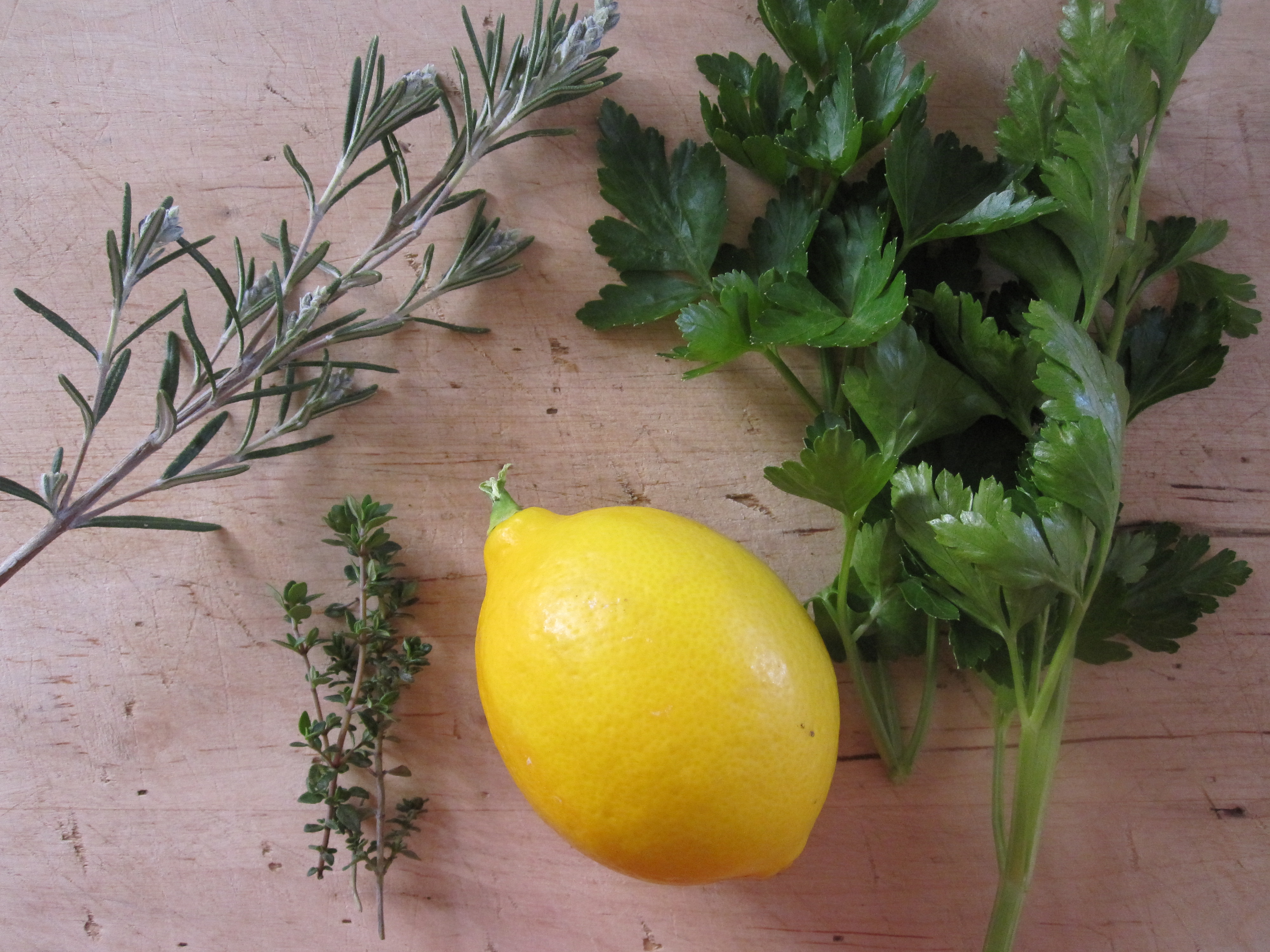 I love the tangy creaminess of chevre. I often serve it as an appetizer with caramelized onion relish or pepper jelly. Another favorite preparation is simply rolling the log in fresh herbs, lemon zest, and ground pepper. It is the perfect last minute appetizer because it is quick, inexpensive, and delicious. It looks like something really special, even though it is incredibly easy to create.
 Using fresh herbs for this recipe is crucial. Fortunately, I live in a climate where my garden provides fresh herbs year round. The following recipe is more of an idea and guideline than a recipe to strictly follow. The precise mixture of the herbs is not crucial, but I like half of the herb volume to be parsley and the other half to be more intense herbs like thyme, rosemary, oregano, and the lemon zest.
 The Fresh Herb Chevre is delicious with grilled or toasted bread. I slice the bread, brush or spray it with olive oil, and then grill or broil until toasted. Guests serve themselves slices of the herb cheese on the toasted bread.
 Fresh Herb Chevre
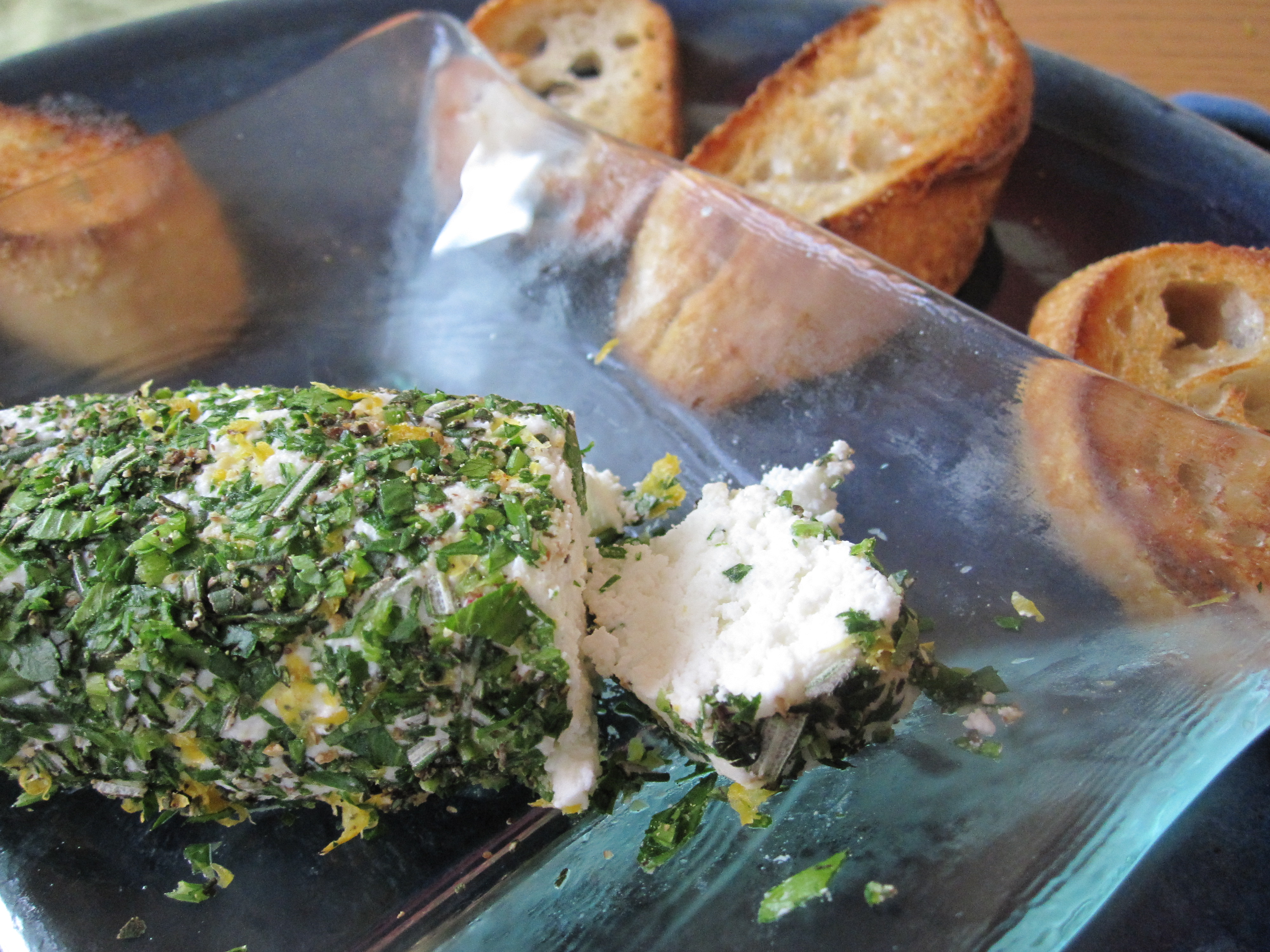
makes one herby loaf of goat cheese
1 8-ounce log of chevre
1/4 cup minced fresh parsley
1 tablespoon minced fresh thyme
1 tablespoon minced fresh oregano
1 tablespoon minced fresh rosemary
1 tablespoon minced lemon zest
1/4 teaspoon freshly ground black pepper
Mince herbs and zest. Mix thoroughly with black pepper. Roll chevre in herb mixture. Serve with toasted bread.
Here is a printer friendly version of the recipe: Fresh Herb Chevre
You may also like:
Lentil Bulgur Salad with Feta and Mint

Orange Quinoa with Almonds, Olives, and Feta

Herb Rubbed Pork Loin with Onion, Raisin, Garlic Compote
February 11, 2011
 Over the past four and a half years, my husband and I have mastered the art of the special dinner at home. Our kids, too young to tuck themselves in, hold us captive. We have a running joke where one of us asks, “What do you want to do tonight?” In response, the other spouts off lists of adventurous ideas all involving actually leaving the house together, even though our kids are sound asleep. We laugh as we pretend we have options aside from the rented movie, the game of dominoes, or going to sleep at a deliciously early hour- oh, now I really am sounding old. All jokes aside, a night at home can be quite special. We prefer to celebrate the opportunity staying in presents, rather than long for the greener grass.
 In our home every detail of our meal can be catered to our whim. We choose festive, fancy, or casual. Our tastes can travel to Thailand, Italy, or Mexico. We can eat with china or our fingers. At home we make the food exactly how we want to eat it. We use only the freshest, seasonal ingredients, all at a fraction of the cost of a nice restaurant meal. There is no need for reservations or babysitters. Perhaps the best reason to celebrate the special dinner at home, is the pride and satisfaction of sitting down together to eat a meal which one of us (or both) have put our heart and hands into preparing with love.
 Our most recent special meal was Herb Rubbed Pork Loin. I used an exceptional brine from the girl and the fig that I have used in the past with chops. Brining allows the meat to retain moisture through the cooking and infuses the meat with tremendous flavor. To ensure the brine and seasoning could permeate the entire roast, I sliced the meat horizontally, a technique I picked up from Cook’s Illustrated. After the brine, I marinated the meat in mustard and herbs from the garden. We were able to take advantage of unseasonably warm weather here in Sonoma County and grill the loin. This could easily be roasted in the oven as well with the added bonus of being able to collect the juices for a gravy.

The pork loin turned out incredibly moist and flavorful. The brine perfectly seasoned the interior of the meat, and the marinade gave a delightful herbal tang to the exterior. Do not overlook the Onion, Raisin, Garlic Compote, it is fabulous! We both agreed that we could eat an entire bowl of it as an official side dish. Onions, raisins, and garlic are cooked down with butter, port, and herbs. This is a perfect accompaniment to the pork loin. This meal turned another night at home with the family into a special night indeed.
Read the rest of this entry »
Cheesy Onion Corn Muffins
February 3, 2011
 Cornbread may be the ultimate quick bread. In under 45 minutes, basic pantry staples- flour, cornmeal, milk, and eggs- turn into hot, tender, crumbly goodness. Cornbread is a natural accompaniment to chili, but is also great with any other bean based soup or grilled meats.

This recipe is one of my favorites, I have made it many times. The onion and cheese add deep flavors to the bread. This combination not only tastes great, but the additional moisture also increases its shelf life. While most cornbread is best eaten right out of the oven, these muffins will stay moist through the day. For added color, try green onions in place of the white onions.


 My Pantry Shelf